
Baccarat Rules and Tricks Game Introduction
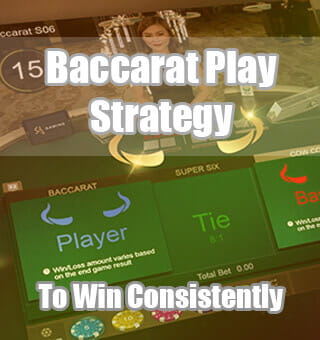
Baccarat is the most popular game around the world, especially played online. Nowadays, more and more casino expand their business onto the internet and hold more and more gaming websites. Esball Eu online casino followed this trend too, and now, numerous Indian players are playing the online Baccarat by looking at the online screen, where it shows the table and the dealer who is dishing out cards.

Online Baccarat Rules
Knowing how to play online Baccarat is simple; the person with the highest total points wins. If the Banker or Player has a total of 8 or 9 points, the game ends. If either the Banker or Player has a total of 6 or 7 points, the game is considered a tie.
Here are the 6 Baccarat rules you need to know below:
- The person with the highest total points wins.
- If the Banker or Player has a total of 8 or 9 points, the game ends.
- If either the Banker or Player has a total of 6 or 7 points, the game is considered a tie.
- In Baccarat, both the Banker and the Player receive two cards. If there is no winner, the Player will receive another card first. The person with a total of close to 9 points wins. If both have equal points, it is considered a tie, and the player has the option to place additional bets.
- The third card for the Banker and Player is not always required, based on the following rules. If the Player has a total of five points or less, they will receive another card.
- Whether the Banker should draw a third card (H) or not (S) is determined by the following chart.
Baccarat Card Dealing Rules
In baccarat, 9 is counted as the largest point, called a natural nine. Second is 8, named as king eight. Whenever there are 8 or 9 points on the bank side or the player side, then no more cards will be dealt; the condition is set right away. Also, when the total points added were 7, then no more cards will be dealt as well. Aside from the previous conditions, when there are only 0,1, or 2 points on one of the sides, then that side is forced to ask for another card. Now, since we have some conditions explained, let’s look into the rest of the scenarios. The following are the 5 scenarios that require a third card on the side.
- When Bank gets 3 points: The Player needs to ask for another card. If the third card makes the Player's point go to 8, then Bank requires no more cards; aside from that, Bank will need the third card.
- When Bank got 4 points: The Player must get another card. When the Player’s point goes to 0,1,8, or 9, Bank gets no more cards; aside from that, Bank will get the third card.
- When Bank gets 5 points: The Player is required to get one more card. If the Player’s point goes to 0,1,2,3,8, or 9, Bank gets no more cards; aside from that, Bank will get the third card.
- When Bank got 6 points: Player is required to get one more card. If the Player’s point goes to 6 or 7, Bank gets one more card. Aside from that, the Bank gets no more cards.
- When the points of both sides are 6 or 7: then no more cards will be dealt. Say if Bank got 6 and Player got 7, Player won. If the point is opposite, then Bank won., If the points were the same, then it’s a tie.
- As for the odds, the odds for Bank are 1 to 0.95, and the odds for Player are 1 to 1. Odds for a Tie are 1 to 8, and pairs are 1 to 11. Lucky 6 got two different odds: win with 6 points is 1 to 12, and win with 6 points and three cards is 1 to 20.
Banker Total 2 Card Count
Here is the Banker’s card count you should know about when it comes to point calculations.
| layer Point | Banker Point | |||||||||
|---|---|---|---|---|---|---|---|---|---|---|
| 0 | 1 | 2 | 3 | 4 | 5 | 6 | 7 | 8 | 9 | |
| 7 | S | S | S | S | S | S | S | S | S | S |
| 6 | S | S | S | S | S | S | H | H | S | S |
| 5 | S | S | S | S | H | H | H | H | S | S |
| 4 | S | S | H | H | H | S | H | H | S | S |
| 3 | H | H | H | H | H | H | H | H | S | H |
| 2 | H | H | H | H | H | H | H | H | H | H |
| 1 | H | H | H | H | H | H | H | H | H | H |
| 0 | H | H | H | H | H | H | H | H | H | H |
Player Total 2 Card Count
If you want to know whether you will be dealt another card or not, you can check out the chart below.
| Player | Player Total 2 Card Count | Banker | Banker Total 2 Card Count |
|---|---|---|---|
| 0 | Need to Add another card | 0 | Need to Add another card |
| 1 | Need to Add another card | 1 | Need to Add another card |
| 2 | Need to Add another card | 2 | Need to Add another card |
| 3 | Need to Add another card | 3 | If Player got 8, game ends |
| 4 | Need to Add another card | 4 | If Player got 1,8,9,10, no need for another card |
| 5 | Need to Add another card | 5 | If Player got 1,2,3,8,9,10, no need another card |
| 6 | Can't ask for another card | 6 | If Player got 6,7, needs to ask for another card |
| 7 | Can't ask for another card | 7 | Can't ask for another card |
| 8 | one-off game | 8 | one-off game |
| 9 | one-off game | 9 | one-off game |
Online Baccarat Tricks
Baccarat is a game of chance, and betting on the Banker or Player is mostly a matter of personal judgment. There’s no scientific way to predict the outcome of each round since every hand is independent.
House Edge and Winning Odds
Baccarat stands out as one of the fairest casino games because it has a very low house edge of only 1.2%, which is lower than Blackjack (2%), Craps (1.4%), and Roulette (2.4%–5.3%). Among the betting options, the Banker has a slightly higher winning chance—45.86% versus the Player’s 44.62%. To balance this advantage, casinos apply a 5% commission on Banker wins.
When it comes to betting options, it’s best to avoid ties and pairs. Tie bets carry a house edge of 14.4%, while pair bets have a 12.15% edge. These are far worse than simply betting on Banker or Player.
Betting Options to Avoid
Many Indian players tend to follow streaks, such as continuing to bet on the Banker after several Banker wins, or follow patterns like the “three and four” rule. These strategies are mostly psychological and do not actually improve your odds. Similarly, road maps and line betting—tracking previous results on scorecards—can be interesting to observe, but since rounds are independent, they should not be relied on unless you fully understand them.
Some players use card counting in baccarat by assigning values to cards (for example, 4 = +3, 3 = +2, 5–7 = -2) to get a slight edge. While this can indicate small shifts in advantage, in practice, the results rarely differ from expected probabilities.
Avoid the Martingale or double-betting strategy. Chasing losses by doubling bets is risky because casinos have deeper bankrolls, and independent rounds mean previous losses don’t improve your chances. Losses can grow quickly and wipe out your bankroll.
Practical Strategies
Here are some practical strategies we find very useful for online Baccarat:
- Ignore Tie Bets: The high house edge makes them a poor choice.
- Bet on Banker: It has the lowest house edge and the highest odds, even with a 5% commission.
- Increase Bets During Banker Streaks: Raise bets moderately if Banker is on a streak, but don’t overbet.
- Use Road Identification Cautiously: Observe patterns but don’t chase losses.
- Switch Between Banker and Player: If a Player bet loses, consider switching to Banker for better odds.
- Manage Your Bankroll: Set limits and stick to them. For example, with $200, bet $10 per round for 20 rounds. Stop if you lose, and only return when you have spare funds.
The most important tip is to know when to stop. Playing too long is the biggest risk in baccarat, as many players lose both their winnings and their capital by not quitting while ahead. Discipline, patience, and proper bankroll management matter far more than any betting system, and this will help you win more on Esball Eu.
Baccarat Strategy